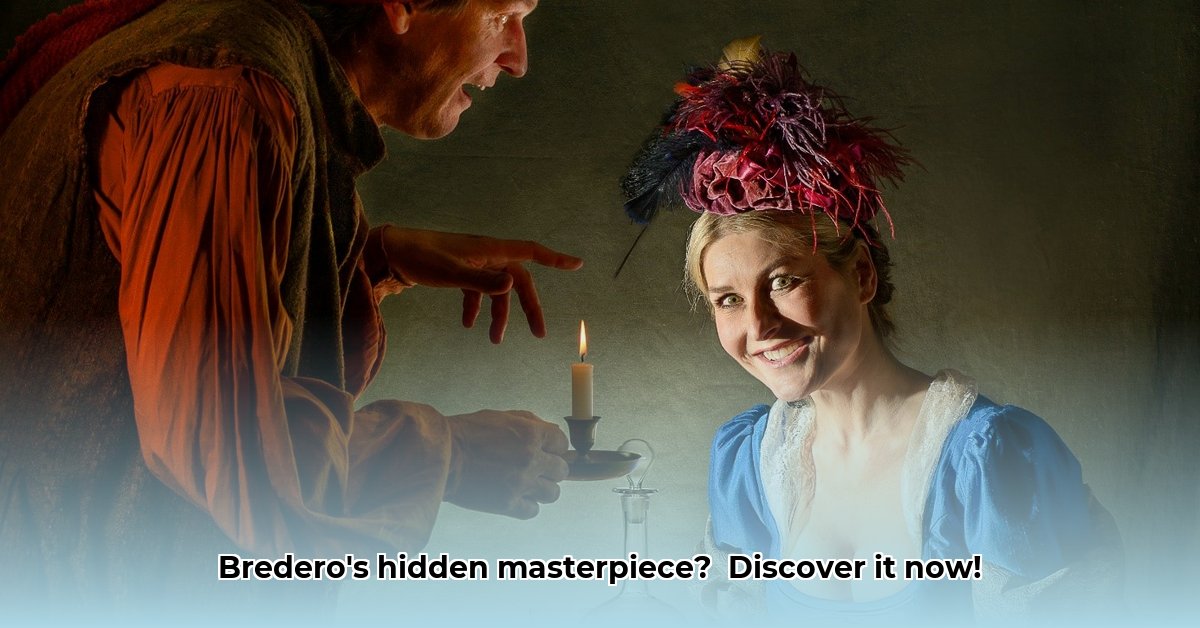
Bredero: A Life in Laughter and Shadows
Gerbrand Adriaensz. Bredero (1585-1618) – the name itself evokes the vibrant tapestry of 17th-century Amsterdam. This wasn't your average playwright; Bredero was a true Renaissance man, a writer, poet, and artist who moved effortlessly through the city’s intellectual elite. He’s celebrated for his kluchten, hilarious farces that remain strikingly relevant centuries later, but his life, tragically cut short, is shrouded in a mystery that only adds to his enduring fascination. Unlike many of his contemporaries who focused on grand narratives, Bredero’s unique contribution lay in his accessible style and diverse genres, capturing the essence of everyday Amsterdam life with unparalleled skill. This essay will explore Bredero's life, his masterful use of various literary forms, and his lasting impact on Dutch culture.
A Life Less Ordinary
Bredero wasn’t born into Amsterdam's elite. He clawed his way into the city's most exclusive circles, rubbing shoulders with the intellectual giants of the “d'Eglantier” rhetoric chamber and the Nederduytsche Academie. This suggests a man of immense charm and intellect, someone who could navigate the complexities of Amsterdam's social landscape with ease. But his social success didn't shield him from life's harsher realities. The circumstances surrounding his death at the young age of 33 remain a puzzle, with ongoing debates about whether it was suicide or illness. This ambiguity adds a layer of intrigue to his already compelling story, leaving us to ponder the impact of his possibly troubled final years on his work. This mystery, however, only deepens his appeal, making him a perpetual subject of fascination for scholars and enthusiasts alike.
A Master of Genre: From Farce to Lyrical Poetry
Bredero's kluchten were the sitcoms of their time. Forget long, tedious speeches; these farces were fast-paced, witty, and filled with relatable characters and everyday Amsterdam slang. Plays like Spaanschen Brabander (The Spanish Brabanter) are masterclasses in comedic timing and character development, showcasing his ability to capture the foibles and flaws of ordinary people with remarkable insight. The play deftly blends humour with social commentary, reflecting the complexities of human interaction, and a willingness to showcase the less savoury aspects of society. His De klucht van de koe (The Farce of the Cow) is a perfect example of his mastery of the genre – a whirlwind of mistaken identities and comedic chaos that remains surprisingly relevant today. Isn't it remarkable how Bredero’s understanding of human nature remains so constant?
But Bredero's skill didn't end with farce. His Groot Liedboeck (Great Songbook) demonstrates his versatility as a poet, ranging from raucous tavern songs to deeply moving love poems. His conscious choice to avoid the overly formal alexandrines favoured by many of his contemporaries, opting instead for traditional Dutch forms, highlights his commitment to his cultural heritage. This wasn't just a stylistic choice; it was a bold artistic statement, solidifying his place as a champion of Dutch identity.
Bredero and the Dutch Golden Age
Bredero’s work is more than just entertainment; it’s a window into 17th-century Amsterdam. His plays and poems offer a vivid portrait of everyday life, providing invaluable insights into the social fabric of the Dutch Golden Age. He seamlessly blended high and low culture, creating work that was simultaneously sophisticated and accessible to all. His keen observation of human behaviour, coupled with his masterful use of language, ensured his works transcended the limitations of their time, echoing in the hearts of audiences today. How did he manage to capture such a timeless essence of human folly and love? His adeptness at drawing from classical, Spanish and French influences while maintaining a distinctly Dutch identity is a testament to his skill.
A Lasting Legacy
Bredero's untimely death leaves much to the imagination, adding to the intrigue and inspiring ongoing scholarship. He remains a captivating figure – a gifted artist, a social chameleon, and an enigmatic personality. The mystery surrounding his final years enhances his appeal, leaving behind a rich legacy that continues to influence and inspire. His kluchten are more than just historical artefacts; they are timeless expressions of human experience, proving that laughter, even amidst life's complexities, remains both powerful and enduring. His legacy endures not only through his works themselves but also the continuous scholarly debate and rediscovery of his genius. The study of Gerbrand Adriaensz. Bredero is therefore more than a journey into Dutch Golden Age literature; it is a journey into the very heart of the human condition.